What’s In This Guide
Condo vs. Single-Family Home: Which is Better?
Brookfield’s Housing Mix: What Buyers Actually Find
Monthly Payment and Ownership Costs
Maintenance and Repair Responsibilities
Privacy, Outdoor Space, and Parking
Candlewood Lake and Community Amenity Access
How to Decide Between a Brookfield Condo and a Single-Family Home
Decision Matrix: Which Property Type Tends to Fit Which Buyer
Why Local Guidance Matters When Comparing Brookfield Housing Options
Ready to Compare Condo and Single-Family Options in Brookfield?
Brookfield, CT, real estate offers two very different paths to homeownership, and the choice between them shapes your monthly budget, your weekend to-do list, and how much of the property is actually yours to maintain. A condo near Federal Road and a single-family home off Obtuse Rocks Road can carry similar price tags but ask completely different things from the buyer who owns them.
Quick Facts
- Condos in Brookfield typically offer lower-maintenance living, but monthly HOA fees can raise the total cost of ownership.
- Single-family homes provide more privacy, outdoor space, and control, but owners are generally responsible for exterior maintenance and repairs.
- Condo buyers should review association budgets, reserve funds, meeting minutes, and potential special assessments before purchasing.
- Candlewood Lake access varies by property, so buyers should confirm whether access is deeded, community-based, public, or unavailable.
- Resale potential depends on property type, pricing, association health, and buyer demand, with single-family homes generally appealing to a broader pool.

Condo vs. Single-Family Home: Which is Better?
Neither property type is the better choice across the board. A condo may suit buyers who prefer lower exterior maintenance and are comfortable with recurring association fees, rules, and the possibility of special assessments. A single-family home may suit buyers who prefer greater control over maintenance and outdoor space and are prepared to manage repair costs directly.
The right fit depends on your monthly budget ceiling, how much maintenance you’re willing to take on, your privacy expectations, and how you plan to use the property, whether that’s daily living, weekend lake access, or a long-term investment.
Brookfield, CT, Condos vs. Single-Family Homes: What Buyers Can Find
Brookfield’s housing stock leans heavily toward single-family homes, with condo and townhome inventory concentrated in specific communities rather than spread evenly across town. Buyers researching Brookfield, CT, condos will find a smaller, more targeted pool of listings compared to the broader single-family market.
Townhome communities such as Oak Meadows provide condo-style ownership options within Brookfield for buyers who prefer a property with association-managed exterior maintenance and shared community responsibilities.
Availability and pricing on developments like this change frequently, so confirming current inventory directly with a local agent is usually more reliable than relying on older listing data.
Monthly Payment and Ownership Costs
A condo’s ongoing housing costs may include a mortgage payment, property taxes, insurance, and recurring HOA or condo fees. A single-family home’s ongoing costs may include a mortgage payment, property taxes, insurance, maintenance, repairs, and any applicable HOA fees.
Census data shows that about 26 percent of U.S. owner-occupied households that paid condo or HOA fees in 2024 paid less than $50 per month, while about 3 million paid more than $500 per month. These national figures show how widely fees can vary, but they should not be used to estimate Brookfield HOA fees without community-specific data. Buyers should verify current fees and what they cover for each property.
READ MORE: How Much House Can You Afford? Brookfield, CT Agents’ Advice
Maintenance and Repair Responsibilities
In a Brookfield condo, the association typically handles at least some exterior maintenance, depending on the property’s governing documents. In a single-family home, the owner is generally responsible for maintenance of the home and property.
Under Connecticut’s Common Interest Ownership Act, the association is generally responsible for maintaining, repairing, and replacing common elements, except where the declaration provides otherwise. Whether features such as roofs, siding, driveways, or shared grounds are classified as common or limited common elements depends on the property’s governing documents. This arrangement can reduce the amount of exterior maintenance an individual condo owner manages directly.
A single-family owner generally has greater control over the timing, contractor choice, and materials for repairs, but is also responsible for the costs of repairs that fall to the property owner. Unlike a condo association, there is typically no association reserve fund available to cover repairs to the individual home.
What Owners Typically Handle in Each Scenario
| Responsibility | Condo Owner | Single-Family Owner |
|---|---|---|
| Roof and exterior siding | Often the association if classified as common elements; check the governing documents | Owner |
| Landscaping and snow removal | Often the association | Owner |
| Interior systems | Usually the owner for systems serving the individual unit | Owner |
| Driveway and walkways | Depends on the declaration | Owner |
| Major structural repairs | Usually the association-managed for common elements, subject to the governing documents and available reserves; unit owners may still pay through regular or special assessments | Owner’s savings, insurance, or financing, depending on the repair |
Privacy, Outdoor Space, and Parking
Single-family homes generally offer more privacy, more usable outdoor space, and more flexible parking than condos. Condos generally offer less exterior space but come with fewer outdoor responsibilities.
A single-family property in Brookfield may include a private yard with room for gardens, a pool, or other outdoor uses, depending on the lot and local restrictions. Parking is often provided through a private driveway or garage, although specific parking rules can vary by property and neighborhood.
Condo living often trades private outdoor space for lower exterior maintenance. Outdoor areas may be shared, patios or balconies may be limited, and parking can be assigned or subject to guest rules depending on the community’s governing documents. For buyers who place less value on private outdoor space, that tradeoff may matter less than it would for buyers who prioritize a yard for everyday use.
Resale Considerations
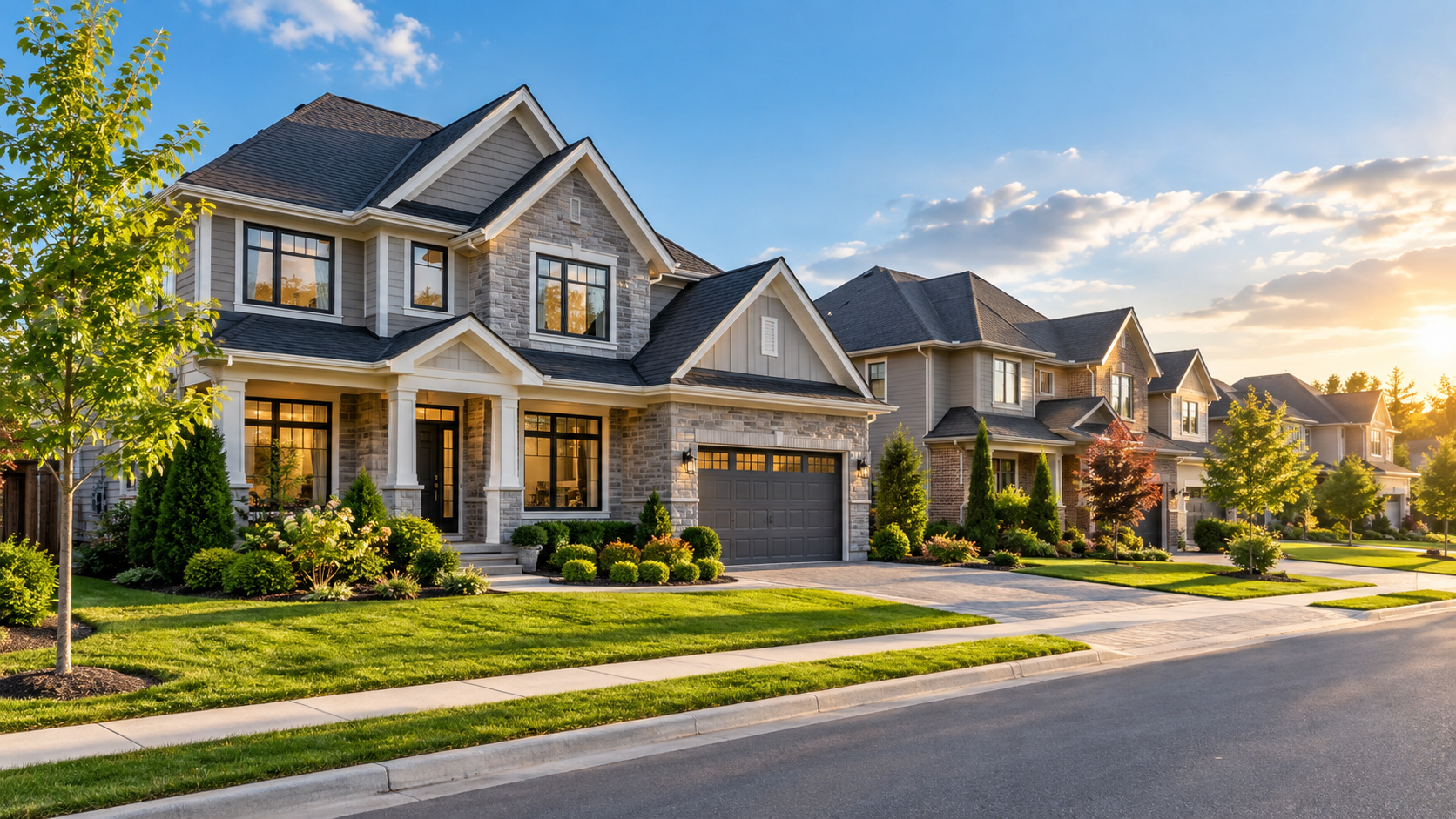
Single-family homes remain the more commonly purchased property type nationally, which can translate into a broader buyer pool at resale. Condos and townhomes appeal to a narrower, but still meaningful, segment of buyers.
Detached single-family homes accounted for the large majority of recent purchases nationally, while condos and townhomes together made up a smaller but consistent share of the market. That doesn’t mean a Brookfield condo is a weak resale bet. It means the buyer pool for a condo may be more specific, including first-time buyers, downsizers, and buyers prioritizing lower maintenance, so accurate pricing and marketing remain important when preparing a condo for resale.
First-time buyers made up 21 percent of the national market in NAR’s 2025 survey, the lowest share recorded since NAR began tracking in 1981. That statistic provides national context only; current Brookfield sales data should be used to compare buyer demand, days on market, and resale conditions for condos and single-family homes.
Candlewood Lake and Community Amenity Access
Lake access is an important property-specific consideration for some Brookfield buyers, and it rarely comes down to a simple yes or no. Candlewood is the largest lake in the state of Connecticut, and Brookfield is one of the member municipalities that funds and participates in the Authority’s shoreline and water quality management work.
Waterfront single-family homes can offer direct frontage, private docks, or deeded access, depending on the specific parcel. Many single-family neighborhoods near the lake, but without direct frontage, rely on community associations, marina memberships, or the town’s public access points instead.
Condo access to Candlewood Lake is community-dependent. Some Brookfield condo and townhome communities may be near shoreline access points, while others have no lake access rights. Buyers should verify whether access is public, deeded, association-based, or unavailable for each specific property.
Commuters weighing location against property type should also factor in transit access. Brookfield does not have a Metro-North station, so buyers may consider nearby Danbury Branch stations such as Bethel or Danbury. Service patterns and transfers vary by train, so current schedules should be checked before relying on a specific commute.
How to Decide Between a Brookfield Condo and a Single-Family Home
Step 1: Calculate Your Full Monthly Number
Add your projected mortgage payment, property taxes, homeowners insurance, and, if applicable, the HOA or condo fee. Compare that full number against a similarly priced single-family home with no monthly fee.
Step 2: Review the Association’s Financial Documents
For any condo under consideration, request the current budget, reserve fund balance, and recent meeting minutes. These documents can help you evaluate how the association manages expenses and reserves and whether recent records identify planned capital projects or potential special assessments.
Step 3: Walk the Property With Maintenance in Mind
Look at the roof, siding, landscaping, and shared spaces, and ask who is responsible for each. For single-family homes, estimate what upkeep will realistically cost you in time and money each year.
Step 4: Weigh Privacy and Outdoor Space Against Convenience
Decide how much yard space, parking flexibility, and exterior privacy actually matter to your daily life, versus how much value you place on someone else handling exterior repairs.
Step 5: Confirm Lake and Amenity Access Directly
Don’t assume lake access based on the town name alone. Confirm whether a specific property includes deeded access, community rights, or no lake connection at all before making it a deciding factor.
Step 6: Think Through Your Resale Timeline
If you expect to sell within a few years, consider how the local buyer pool for that property type has performed recently, and how your specific community’s fees or rules might affect future buyer interest.
Decision Matrix: Which Property Type Tends to Fit Which Buyer
| Buyer Profile | Often Leans Toward | Why |
|---|---|---|
| First-time buyer | Either, depending on budget | Condos can offer a lower entry price, but single-family homes avoid a recurring fee |
| Downsizer or repeat buyer | Condo or townhome | Lower exterior maintenance may appeal to buyers who want fewer ongoing upkeep responsibilities |
| Commuter near Bethel or Danbury | Either | Proximity to the Danbury Branch station often matters more than property type |
| Buyer prioritizing more private space | Often single-family home | Detached homes may offer more private outdoor space and fewer shared walls, depending on the property |
| Low-maintenance lifestyle seeker | Condo | Association-managed exterior repairs reduce ongoing homeowner tasks |
Why Local Guidance Matters When Comparing Brookfield Housing Options
Comparing a condo’s governing documents against a single-family home’s maintenance history requires local context that generic listing sites don’t provide. Local experience matters when it comes to reading an association’s reserve fund report, understanding which Brookfield neighborhoods carry deeded lake rights versus community access, and knowing which townhome developments currently have inventory worth touring.
Frequently Asked Questions
Is it cheaper to buy a condo or a single-family home in Brookfield?
It depends on the specific properties being compared. A condo’s purchase price may be lower, but the monthly HOA fee adds an ongoing cost that a comparable single-family home usually doesn’t carry. Comparing total monthly housing cost, not just purchase price, gives a more accurate picture.
Is a condo a good investment for resale in Brookfield’s market?
Condos can resell well, particularly to first-time buyers and downsizers, but the buyer pool tends to be narrower than for single-family homes. Pricing accurately for the local condo market and understanding the association’s financial health both play a role in resale performance.
Are single-family homes more expensive to maintain?
They can be. Owners are typically responsible for all repairs, landscaping, exterior maintenance, and major systems, which can make costs less predictable.
Which is better for first-time buyers in Brookfield?
It depends on budget and lifestyle. Condos may offer a lower entry price and less maintenance, while single-family homes provide more space, privacy, and control.
How much maintenance is involved with a condo compared with a single-family home?
Condos typically require less exterior upkeep because the association handles many shared areas. Single-family homeowners are generally responsible for all exterior maintenance and repairs.
Ready to Compare Condo and Single-Family Options in Brookfield?
Deciding between a condo and a single-family home in Brookfield often comes down to details that aren’t visible in an online listing. Lavelle Remax works with buyers across Brookfield and the surrounding western Connecticut towns to evaluate both paths side by side.
If you’re weighing a Brookfield condo against a single-family home, a conversation with a local agent can clarify which option actually fits your budget and lifestyle.
Disclaimer: This article is for general informational purposes only and reflects real estate practices and market conditions at the time of publication. It should not be relied upon as financial, legal, or investment advice. Buyers should consult a licensed real estate professional, attorney, and financial advisor for guidance specific to their transaction.


